Chayei Sara
satisfied, and still thirsty
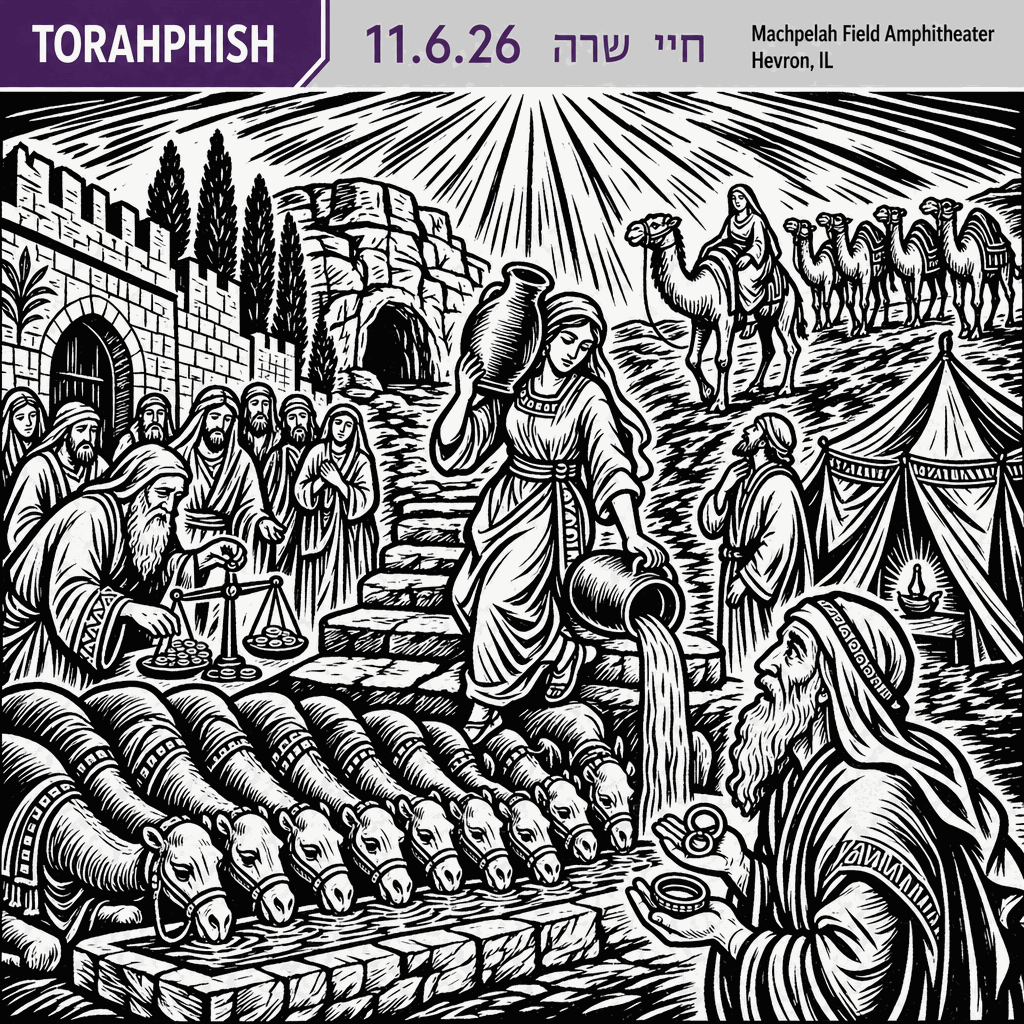
Sarah is buried in the cave of Machpelah. Avraham weighs out four hundred shekels of silver at the town gate, in front of everybody, for a cave at the edge of a field... and buries his wife.
Then one line:
"v'Avraham zaken ba bayamim" - "וְאַבְרָהָ֣ם זָקֵ֔ן בָּ֖א בַּיָּמִ֑ים" - "and Avraham was old, come into days."
🎶 'And the days turn to years'
🎶 'This all should get easier'
(Trey wrote Miss You for his sister. It belongs at this cave.)
Old. Widowed. And the same verse ends "וַֽה' בֵּרַ֥ךְ אֶת־אַבְרָהָ֖ם בַּכֹּֽל" - "and Hashem blessed Avraham with EVERYTHING."
Everything? He just buried his wife.
The Ramban says "everything" means riches, honor, long life, children, all of it. Avraham was missing just one thing: he wanted to see children from his son. "וְלָכֵן הִתְאַוָּה לָזֶה" - "and so he longed for it." That longing is about to send a servant to a well.
But Rav Mordechai Yosef of Izhbitz, in the Mei HaShiloach, hears something deeper in "old, come into days, blessed with everything." To find it, he goes to another old man who had everything.
Shlomo HaMelech.
The Gemara in Sanhedrin tells his story as one long slide. Reish Lakish says: at first Shlomo ruled over the upper worlds. Then over the whole world. Then only Israel. Then only Yerushalayim. Then only his own bed. And at the end, "לֹא מָלַךְ אֶלָּא עַל מַקְלוֹ" - "he ruled over nothing but his STAFF." (Rashi: Ashmedai, king of the demons, threw him off his own throne.)
🎶 'Beside him was an empty throne'
And the Gemara hears it in Shlomo's own words, in Kohelet: "וְזֶה הָיָה חֶלְקִי מִכָּל עֲמָלִי" - "and THIS was my portion from all my toil."
This? What's "this"?
Rav and Shmuel argue. One says his staff. The other says גּוּנְדּוֹ. Rashi explains that as his cloak, and then brings Rav Hai Gaon: it's a clay cup you drink water from. The Izhbitzer goes with the cup and says it plainly: "כַּדּוֹ" - his JUG.
So picture it. The richest, wisest king who ever lived... down to a stick and a cup.
You'd think Kohelet is crying here. The Izhbitzer says Shlomo was BRAGGING.
Why would he brag? Because the pleasures of this world "לֹא הָיָה נֶחְשָׁב אֶצְלוֹ לִמְאוּמָה" - "counted for nothing to him." What he's telling us is: it looks like everything was taken from me, but "הַתַּמְצִית הָעוֹלֶה מִכָּל חַיֵּי עוֹלָם הַזֶּה נִשְׁאַר אֶצְלוֹ" - "the extract of all of life in this world stayed with me."
The extract. Picture a big pot of soup cooking down on the fire all day, until all that's left is the concentrate, the part that holds all the flavor. Shlomo's whole life got cooked down like that... and what was left in his hands was a stick and a jug.
The staff, says the Izhbitzer, is "כֹּחַ הַחַיִּים" - "the power of life" - still in his hand. His proof is the prophet Zechariah, who promises that old men and women will sit in the streets of Yerushalayim again, "וְאִ֧ישׁ מִשְׁעַנְתּ֛וֹ בְּיָד֖וֹ מֵרֹ֥ב יָמִֽים" - "each with his staff in his hand, from their many days."
Many days. Sound familiar? That's our Avraham, ba bayamim. The staff is what you hold when you've lived a lot of days and you're still on your feet.
And the jug? "כְּלִי קִבּוּל" - "a vessel for receiving." You carry a jug for water you don't have yet.
So a king who still has his jug at the end is "מוּכָן וּמִשְׁתּוֹקֵק עוֹד לְהוֹסָפָה" - "ready, and still yearning for more." That was his delight, says the Izhbitzer, because "זֹאת הִיא הָעִיקָּר בְּחַיֵּי עוֹלָם הַזֶּה" - "this is the main thing in the life of this world."
The main thing? More than the wisdom, more than the throne?
You can't fill a jug that's already full. You can't fill one with the lid on. The only jug that can still take something in is an open one, held out... and Shlomo is still holding his out.
🎶 'I'm up and I can take what you give'
More of what, though? Shlomo already told us he doesn't care about the stuff.
So the Izhbitzer goes back to our pasuk and says exactly what Avraham was thirsty for. "Come into days" means "שֶׁבָּא אֶל שָׁרְשֵׁי הַחַיִּים" - "he came to the roots of life," "וְהָיָה כְּלִי לְקַבֵּל וְהִשְׁתּוֹקֵק לְהוֹסָפוֹת חַיִּים מֵאֵת ה' בְּכָל פַּעַם יוֹתֵר" - "and he was a vessel to receive, and he yearned for more LIFE from Hashem, more every time."
The roots of life. At a hundred and forty, Avraham has gone all the way down to the place life comes from... and he's standing there holding out his jug.
Old. Blessed with everything. And THIRSTY.
🎶 'There must be something more than this'
Now back to the Ramban, and the one thing Avraham still longed for. He sends his servant to find Yitzchak a wife... and the servant ends up at a well.
Ten camels kneel outside the city of Nachor at evening.
🎶 'Camel walk!'
(Sorry. Somebody had to.)
A girl comes down "וְכַדָּ֖הּ עַל־שִׁכְמָֽהּ" - "with her jug on her shoulder."
Her jug. Kadah. The same jug the Izhbitzer just put in Shlomo's hand, kado.
The servant runs toward her, and Rashi tells us why: "שֶׁרָאָה שֶׁעָלוּ הַמַּיִם לִקְרָאתָהּ" - "because he saw the water RISE to meet her."
A girl walks down to the spring with an empty jug... and the water comes up to fill it.
The servant asks for a sip. She gives it. And then:
"vatemaher vate'ar kadah el hashoket vatarotz od el habe'er lishov" - "וַתְּמַהֵ֗ר וַתְּעַ֤ר כַּדָּהּ֙ אֶל־הַשֹּׁ֔קֶת וַתָּ֥רׇץ ע֛וֹד אֶֽל־הַבְּאֵ֖ר לִשְׁאֹ֑ב" - "she hurried and EMPTIED her jug into the trough, and ran again to the well to draw."
Od (ע֛וֹד), again. The same word as the Izhbitzer's "עוֹד לְהוֹסָפָה," still more.
Ten camels after a desert crossing, and one girl with one jug. Pour it out, run down to the water, fill it, haul it up, pour it out. Run again.
Her jug is never full for long. That's the girl Hashem picked to be Imeinu: the one who keeps emptying her jug and running back.
And Avraham himself? A chapter later: "וַיֹּ֧סֶף אַבְרָהָ֛ם וַיִּקַּ֥ח אִשָּׁ֖ה" - "and Avraham ADDED, and took a wife." Vayosef, from the same root as hosafa (הוֹסָפָה), more.
The Midrash Tanchuma says a pasuk in Tehillim is about Avraham right here: "וַאֲנִי תָּמִיד אֲיַחֵל וְהוֹסַפְתִּי עַל כָּל תְּהִלָּתֶךָ" - "as for me, I will always hope, and I will add to all Your praise."
The old man is still adding.
When he finally dies, the Torah calls him "זָקֵ֣ן וְשָׂבֵ֑עַ" - "old and satisfied."
Wait. Satisfied? I thought he was thirsty???
The Ramban explains "satisfied": he saw every wish of his heart come true (grandchildren included), "וְלֹא יִתְאַוֶּה שֶׁיְּחַדְּשׁוּ בּוֹ הַיָּמִים דָּבָר" - "and he didn't crave for the days to bring him anything new." Tzaddikim, he says, don't crave luxuries. Everybody else is like the Midrash he brings: "יֵשׁ בְּיָדוֹ מָנֶה מִתְאַוֶּה מָאתַיִם" - "he has a hundred, he wants two hundred."
So there are two kinds of thirst.
One is the thirst for more stuff, and it never ends. Avraham was done with that one. On that, he was satisfied.
The other is the jug, the thirst for more life from Hashem. That one Avraham carried all the way to a hundred and seventy-five.
Satisfied with the world... and still thirsty for Hashem.
-----
We figure the thirst belongs to the kid at his first show, phriends, screaming every word like it was written for him that morning.
🎶 'Can't I live while I'm young?'
Ten feet away, a vet somewhere past show two hundred stands with his arms crossed. "Eh. I've got forty of these." (Most of us have been both. Some of us in the same weekend.)
Year after year the jug fills up... and somewhere in there the lid goes on.
🎶 'The binding belt enclosing me, a sample in a jar'
But the Izhbitzer puts the jug in the hands of an old king who lost everything, and the Torah puts it in the hands of an old man who had everything.
Where does the lid go on in your week? Maybe Friday night, fifth verse of Lecha Dodi, and your head is already thinking of being in bed and finally getting that much needed rest.
Or the Shemoneh Esrei you've recited ten thousand times. You could say it in your sleep... and some mornings you do...
It's sweet and it's important... but it's a sign that the jug is closed...
So take the lid off. Say one line, one word even - with kavanah! And when that fifth verse of Lecha Dodi comes around, allow yourself to feel the relief, calm, and sweetness of Shabbat to ease your bones, not "getting through davening and dinner" just to crash in bed...
Lastly, listen to this: the Midrash says that Hashem spoke to Rivka at that well, and He told her: "אַתְּ סִימָן לְבָנַיִךְ" - "you are a sign for your children." You hear that, phriends? We are Rivka's children, mamesh. Come to Ribono Shel Olam with an empty jug, and the water will always rise to meet you.
May Hashem keep our thirst for Him alive, and fill our jugs every time we come running back to Him... satisfied with what we have, and still thirsty for Him, all the days of our lives.
Good Shabbos, phriends.
The sources behind this dvar, in Hebrew and English, with questions to look into.
- Miss You▶ listen2016-10-18 · Ascend Amphitheater, Nashville, TN
- My Friend, My Friend▶ listen2017-07-25 · Madison Square Garden, New York, NY
- Taste▶ listen1997-08-17 · Loring Commerce Centre, Limestone, ME
- More▶ listen2017-07-23 · Madison Square Garden, New York, NY
- Camel Walk▶ listen2018-10-21 · Hampton Coliseum, Hampton, VA
- Chalk Dust Torture▶ listen1999-07-10 · E Centre, Camden, NJ
- Sample in a Jar▶ listen2017-07-25 · Madison Square Garden, New York, NY
Mei HaShiloach / Sanhedrin 20b / Rashi on Sanhedrin 20b / Ramban on Bereishit 24:1 / Rashi on Bereishit 24:17 / Bereishit Rabbah 60:5 / Zechariah 8:4 / Midrash Tanchuma, Chayei Sara 7 / Ramban on Bereishit 25:8