Re'eh
one light, and the whole difference is you.
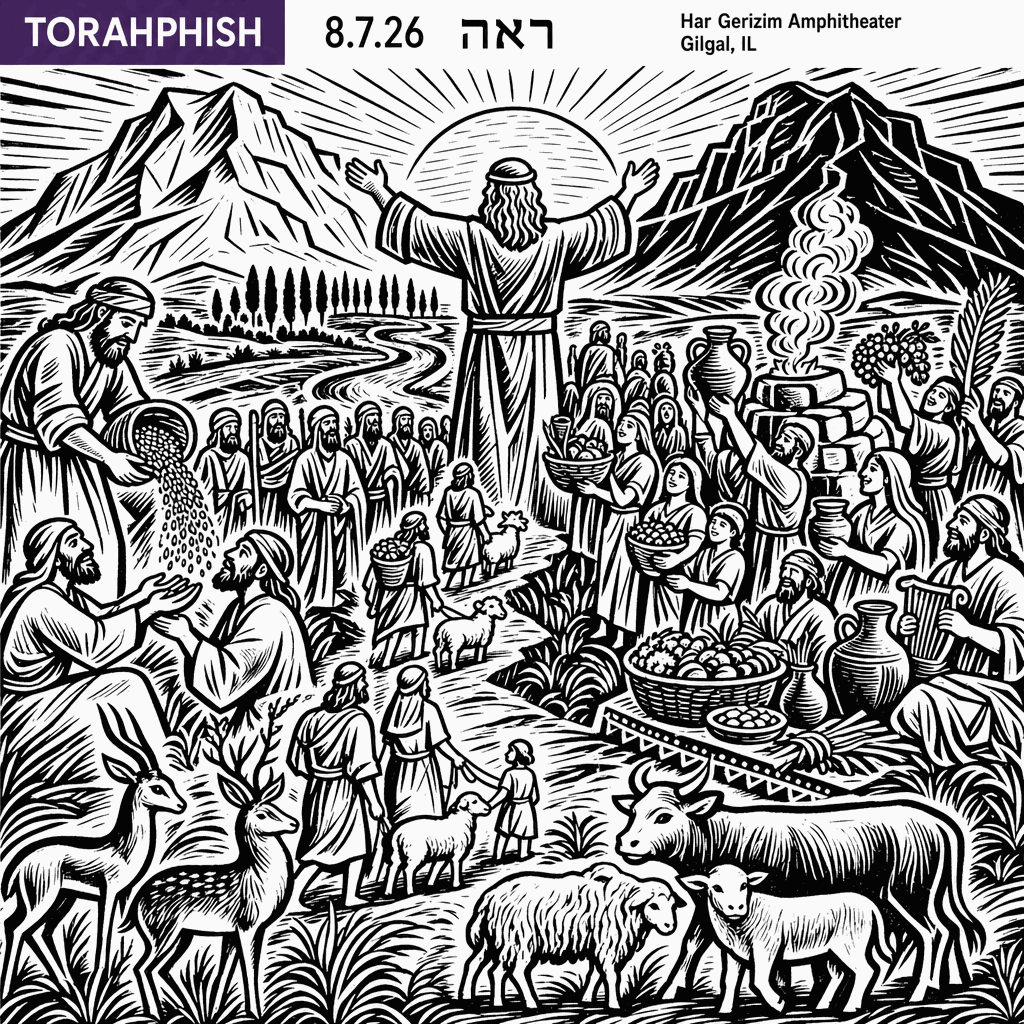
רְאֵה — "See," the parsha opens, "I set before you today blessing and curse." And then Moshe splits them across two mountains: the blessing on Gerizim, the curse on Eival. But look at what the Ohev Yisrael notices — both mountains carry the very same holy Names. The sun, he says, shines one light on everyone, and that one light whitens linen and blackens leather, melts wax and hardens clay: מכ"מ ישתנה הדבר לפי ערך המקבלים זריחתה — "the thing changes according to the capacity of those who receive its shining." Heaven pours one thing. Whether it lands as blessing or as curse gets decided down here, in the vessel. In you. That's why the first word is See. The seeing IS the work.
I'm reminded of the nights Phish takes a whole room somewhere we all wish we could get to at any moment — somewhere beyond, somewhere chaotic but safe, beautiful and sad at once, where the pain and the joy are both all the way there and everybody smiles and dances through it anyway. Hampton Coliseum, November 22, 1997. A run of notes could split you wide open. And you can hear that same passage on another night, in another room, and feel nothing, cold as the floor. Same notes both nights. The difference was in you — and honestly, that gap is the humbling part. The shefa is steady; the receiving is not. So the whole avodah is learning to be the kind of keli that lets the good land as good — to look past what your week reports on the surface and catch the one flow underneath. 'I can see through the lines' is exactly that: seeing past what the surface says to the real thing moving under it.
And the parsha won't leave "vessel" abstract. It hands you the test: פָּתֹחַ תִּפְתַּח אֶת־יָדְךָ — "open, you shall surely open your hand" to your needy brother, give readily, and don't let your heart go mean as the seventh year approaches. That's what a clear keli does: it passes the flow straight through to a hand that's empty — דֵּי מַחְסֹרוֹ, "enough for his need." 'I'm the man that brings you roses when you ain't got none' — chesed measured by the other person's lack. Give like that and the same light that could've curdled becomes blessing, for two people at once.
So See is active. It's the discipline of looking — at the one light behind the two mountains — and then opening your hand so the light can move through you. May we each become a clear enough keli that the steady shefa lands in us as blessing and flows out of us as blessing, while it's still called הַיּוֹם, today. 'May the good Lord shine a light on you'. Good Shabbos, phriends.