Toldot
who tithes the salt?
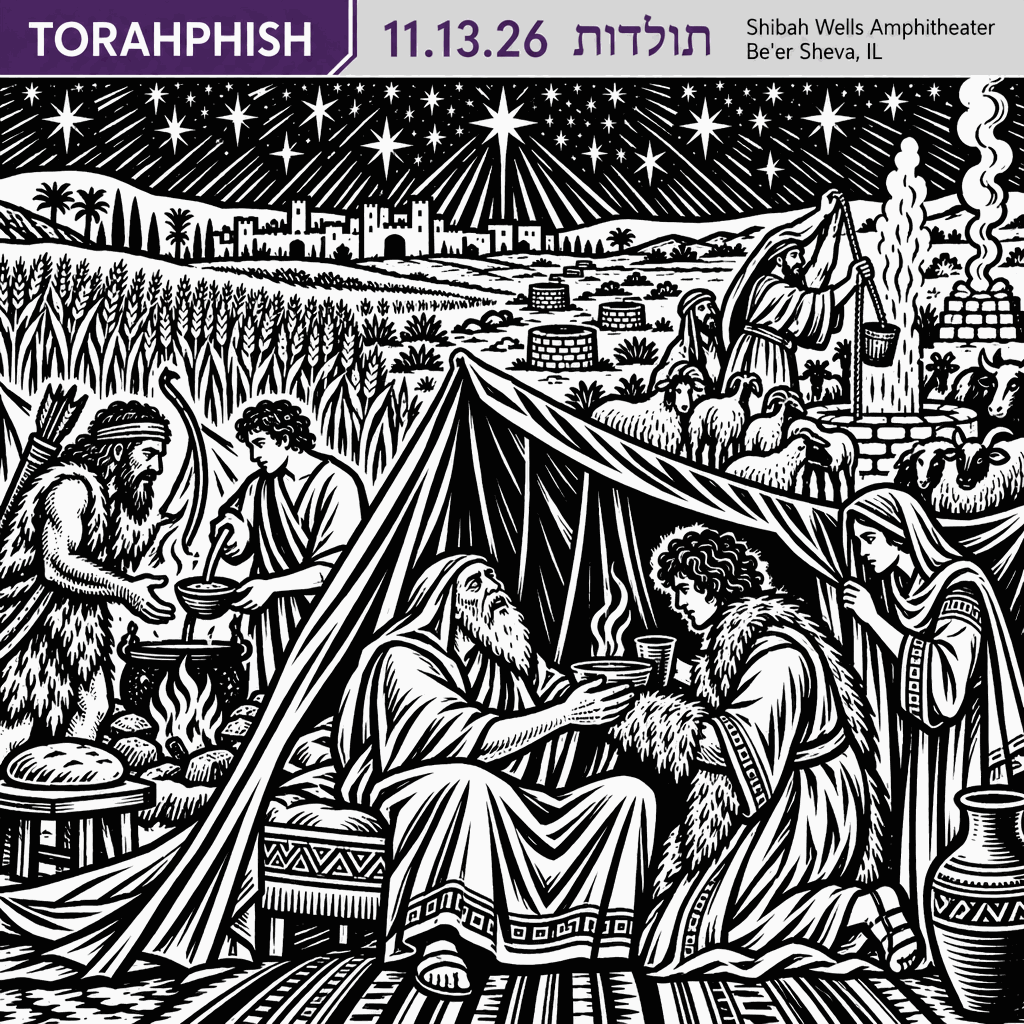
This week's parsha is about the things we DO, and how much of it we actually know we're doing. Some of our deeds we hand to Hashem on purpose. But most of the week, we're running on autopilot, or with mixed motives, or in a rush just to get through the day... So what happens to all of that? Does any of it count?
Toldot answers that question, and it starts in the dark.
Yitzchak is old, and his eyes have gone dark.
"vatichhena einav meirot" - "וַתִּכְהֶ֥יןָ עֵינָ֖יו מֵרְאֹ֑ת" - "and his eyes were too dim to see."
🎶 'Where do you go when the lights go out?'
He calls in Esav, his older son. Take your bow, go out to the field, hunt me something and cook it the way I love it, "בַּעֲב֛וּר תְּבָרֶכְךָ֥ נַפְשִׁ֖י בְּטֶ֥רֶם אָמֽוּת" - "so that my soul may bless you before I die."
Wait. Yitzchak Avinu, the man who lay on the mizbeach, wants to give the bracha to ESAV???
Rashi gives the answer we all heard as kids: Esav "hunted" his father with his mouth. He'd come in with a question that made him sound "frum": "אַבָּא, הַאֵיךְ מְעַשְּׂרִין אֶת הַמֶּלַח וְאֶת הַתֶּבֶן?" - "Abba, how do you tithe salt? And straw?" Salt and straw don't get tithed at all... and Yitzchak thought, look at this kid, "מְדַקְדֵּק בְּמִצְוֹת" - "so careful with mitzvos."
Hold on to that salt. We're coming back for it.
Because the Izhbitzer school won't accept that Yitzchak was fooled. The son of the Mei HaShiloach, Rav Yaakov Leiner, says it flat out in the Beit Yaakov: "חלילה לא היה ליצחק טעות בעשו" - "Heaven forbid, Yitzchak made no mistake about Esav."
The proof is one pasuk before Yitzchak's eyes go dark. Esav marries two Hittite women, and they are "מֹ֣רַת ר֑וּחַ לְיִצְחָ֖ק וּלְרִבְקָֽה" - "a bitterness of spirit to Yitzchak and Rivka."
🎶 'I saw it all you know I was so blind'
He knew. So why on earth is he blessing Esav?
Rav Mordechai Yosef of Izhbitz, in the Mei HaShiloach, opens with a pasuk from Tehillim: "זָרַח בַּחֹשֶׁךְ אוֹר לַיְשָׁרִים" - "a light shines in the DARKNESS for the upright." Yitzchak saw that Esav's deeds "אֵינָם טוֹבִים" - "weren't good." What he couldn't see was which of his sons was more beloved to Hashem... so he davened that Hashem should show him the truth.
And he had a reason to wonder. Esav moves "בְּשֶׁטֶף וְזֶרֶם" - "like a flood and a torrent."
Yitzchak looked at all that force going everywhere at once, and saw what it could become. "אִם יְבָרְרוֹ הַשי"ת לְטוֹב אָז יִהְיֶה גָּדוֹל מְאֹד" - "if Hashem would SORT him out for good, he'd be very great." (And Esav was the bechor. Yitzchak's way is din, says the Mei HaShiloach, "יִקּוֹב הַדִּין אֶת הָהָר" - let the law pierce the mountain. Rules are rules.)
Sort him out. That word, levarer (לברר), runs through this whole teaching. So what does it mean for a person to be sorted?
The Beit Yaakov answers that question with Esav's own question... about tithing the salt.
When you give ma'aser, you take a tenth of your grain and give it to the Levi. The Beit Yaakov says that's "כמו שמסרו להשם יתברך" - "as if he handed it to Hashem."
That's what sorted means: a deed you do with intention, but a SPECIFIC intention that it's לשם שמים בלבד - it's done purely and solely for Hashem.
Most of what we do isn't that clear.
The Mishna in Maasrot gives the rule for what gets tithed: "כָּל שֶׁהוּא אֹכֶל, וְנִשְׁמָר, וְגִדּוּלָיו מִן הָאָרֶץ" - "whatever is food, and is guarded, and grows from the ground."
So why not salt? The Beit Yaakov says salt only "גורר תאות האכילה" - it drags your appetite along, makes you hungry for the real food. And straw? "אין לאדם שום טעם ותפיסה בו" - "a person has no taste of it and no grip on it at all."
Nothing to grab... so nothing to tithe.
And that, says the Beit Yaakov, is a whole part of every person's life: "במקום שישן האדם ושלא מדעת" - "where a person is asleep, acting without awareness."
The drive to work you don't remember. Eight hours at a desk. Eating a midnight snack standing over the kitchen sink. The Mincha you tried to squeeze in at a red light, sort of. A whole week of a hundred things that never really had a thought of Hashem in the forefront...
🎶 'Most of them are clockwork'
And the Beit Yaakov isn't scolding anybody: "באדם מוכרח להיות לפעמים מעט שכחה" - "a person has to forget sometimes." You can't be awake every second. Nobody is. Because we're human.
And autopilot is only one kind of what we're calling "unsorted." The Beit Yaakov says even the holy deed of tzedakah can need this special "sorting." Somebody gives to a poor man "כדי שיחיה בנו" - "so that his son should live." The Gemara calls him a tzaddik gamur! And still, says the Beit Yaakov, this deed, this mitzvah, needs sorting, "פן היה כוונתו להנאת עצמו" - because "maybe part of it was for himself."
Half for Hashem, half for me... and it can get hard to tell which half is which.
So who tithes, or "sorts" all of THOSE deeds? The Beit Yaakov: "וזהו רק השי"ת בעצמו" - "that's only Hashem Himself."
Which means Esav was asking a real question. How do you tithe the salt? What happens to all the parts of me I can't get my hands on, that I have no way of sorting myself?
Esav's life was salt and straw... an unsortable life! Yitzchak wanted to bless exactly that part of him... so that even those deeds would last forever.
Could Hashem sort a life like that? Of course He could. The Beit Yaakov says so straight out.
The question is: Would He?
Now open your hearts, phriends, and let's go deeper:
Hashem sorts "רק למי שמברר עצמו בדעתו ושכלו עד מקום שידו מגעת" - "only for someone who sorts himself, with his own mind, as far as his HAND reaches." And for that person, Hashem goes further, "במקום שאין ידו מגעת" - "to the place his hand doesn't reach."
Do the part you can reach... and Hashem does the rest.
And Esav? "אף במקום שיודע שרצון השי"ת הוא כך הוא עושה להיפך" - "even where he KNOWS what Hashem wants, he does the opposite." The Beit Yaakov says that's what the salt question really meant. He threw himself into bad deeds "בכדי שהשי"ת יבררו על ידם" - "so that Hashem would sort him through them."
He took the part he could reach and turned it into salt and straw on purpose. Then he sat back and waited for Hashem to tithe it, to sort it all out for him.
So here's the whole difference between the brothers. Both of them have a week full of salt and straw. Yaakov does what his hand can reach, and Esav won't.
Now let's go back to Yitzchak's tent, the bracha, and the moment when Yaakov walks in.
Rivka dresses him in Esav's best clothes and wraps goatskins around his smooth hands and neck. Yitzchak reaches out and feels him:
"hakol kol Yaakov v'hayadayim yedei Esav" - "הַקֹּל֙ ק֣וֹל יַעֲקֹ֔ב וְהַיָּדַ֖יִם יְדֵ֥י עֵשָֽׂו" - "the voice is the voice of Yaakov, and the hands are the hands of Esav."
"וְלֹ֣א הִכִּיר֔וֹ כִּֽי־הָי֣וּ יָדָ֗יו כִּידֵ֛י עֵשָׂ֥ו אָחִ֖יו שְׂעִרֹ֑ת וַֽיְבָרְכֵֽהוּ" - "and he didn't recognize him, because his hands were HAIRY like his brother Esav's... and he blessed him."
Hairy. The Beit Yaakov says hair is "הפעולות שאין להאדם שום דעה בהם ואינו מרגיש בהם כלל" - "the actions a person has no awareness of, and doesn't feel at all." (Cut your hair. Feel anything?) Esav was born that way, "כֻּלּ֖וֹ כְּאַדֶּ֣רֶת שֵׂעָ֑ר" - "all over like a coat of hair." And now Yaakov walks in with it on his hands.
🎶 'Took all of my old clothes with him'
Look at what Yaakov is wearing. The Beit Yaakov says Esav's clothes are the outside of a Jew's life that looks like everybody else's: "מוטרד בפרנסה או באיזה טרדא" - "harried by parnassah, or some other pressure." Working, rushing, earning a living. He might even trip in there. From across the street, he looks exactly like Esav. But inside those clothes, "עומק לבו ודעתו ורצונו" - "the depth of his heart, his mind and his will" - want nothing except what Hashem wants.
Now the chiddush of the Mei HaShiloach. Why did this have to happen in the dark? Hashem could have opened Yitzchak's eyes and let him bless Yaakov on purpose!
He could have. And then Yaakov "הָיָה מִתְבָּרֵךְ רַק בְּאֹפֶן שֶׁמַּעֲשָׂיו יִהְיוּ מְבֹרָרִים" - "would be blessed only as far as his deeds were sorted."
A knowing bracha covers what you knowingly did. The tithed grain. And the Beit Yaakov spells out what happens to everything else Yaakov did without awareness: "היו מתבטלים" - "it would have been lost."
Hold on. Wasn't Yaakov the sorted one? Why does he need a bracha for the unsorted stuff?
Because the Beit Yaakov says "וגם יעקב צריך לברורים" - "Yaakov too needs sorting," as long as he isn't finished. And nobody in this world is finished. Yaakov had both kinds of deeds, like the rest of us.
And here's how I understand why the knowing bracha can't reach the rest. You can only bless on purpose the good you can see. Nobody can see the good hiding inside a mess... so the bracha for the mess had to come in the dark.
But Yitzchak thought he was blessing Esav, the man of salt and straw. So he aimed his bracha at the whole hairy coat... and it landed on Yaakov. Clothes, goatskins and all.
And Yaakov is about to need every bit of it. Twenty years with Lavan: "הָיִ֧יתִי בַיּ֛וֹם אֲכָלַ֥נִי חֹ֖רֶב וְקֶ֣רַח בַּלָּ֑יְלָה" - "by day the heat ate me, and the frost by night." Twenty years of Esav's clothes.
So even if Yaakov, chas v'shalom, does things that aren't sorted, "יִתְבָּרְרוּ לְטוֹבָה וְלֹא יִדַּח מֵהֶם נִדָּח" - "they will be sorted out for GOOD, and not one of them will be cast away." Hashem will save, says the Beit Yaakov, "ואפילו להשערות של יעקב" - "even Yaakov's HAIRS."
And then maybe the deepest line of all. When Hashem sorts the places a person's hand couldn't reach, the Beit Yaakov says they come out "יקרים יותר מבאם האדם היה מאיר אותם מדעתו" - "MORE precious than if the person had lit them up himself."
Yitzchak saw more light hiding in Esav's dark than in Yaakov's revealed radiance. He was right about the light... and Hashem made sure it went to Yaakov.
When Yitzchak finds out, he trembles, "חֲרָדָה֮ גְּדֹלָ֣ה עַד־מְאֹד֒" - "a trembling, great beyond measure"... and then he says, "גַּם־בָּר֖וּךְ יִהְיֶֽה" - "he will indeed be blessed."
There's the light in the darkness from the Mei HaShiloach's pasuk. Hashem led Yitzchak "לְמַעְלָה מִדַּעְתּוֹ" - "above his own knowledge"... and Yaakov walked out with a bigger bracha than anyone could have given him on purpose.
-----
Phriends, come back with me to the night before Pesach. בדיקת חמץ.
Lights off. Candle in one hand, feather and wooden spoon in the other. The kids trail you from room to room in their pajamas, and somebody hid ten pieces of bread in tinfoil. (Every year one of them turns up around Shavuos. Behind the couch. Don't ask.)
You check every room, every coat pocket, every corner your candle can reach.
And then the Mishna in Pesachim lets you stop: "אֵין חוֹשְׁשִׁין שֶׁמָּא גָרְרָה חֻלְדָּה מִבַּיִת לְבַיִת" - "we don't worry that maybe a weasel dragged chametz from house to house." Because if you did, "אֵין לַדָּבָר סוֹף" - "there's no end to it."
The Izhbitzer's grandson, in the Tiferet Yosef, brings a teaching from his grandfather and hangs it on that Mishna, and it's our parsha all over again. A person who checks himself "עד מקום שידו מגעת" - "as far as his hand reaches" - doesn't have to worry about the corners he can't. "יברר אותו השי"ת" - "Hashem will sort him."
But a person who skips the part he can reach and leans on Hashem to sort everything? "אז אין השי"ת מברר אותו" - "then Hashem doesn't sort him."
And notice the order. Only after the search do we say Kol Chamira, handing over all the chametz "וּדְלָא יְדַעְנָא לֵהּ" - "that I don't know about." Search first, then let go.
Yaakov takes the candle into every room he can. Esav skips the search, says Kol Chamira, and goes to bed.
So tonight, before candle lighting, take the candle through your week.
Some of it your hand can reach. The kid you snapped at on Tuesday... he's in the next room. Go fix it. The phone call you've been putting off since Sunday. One bracha on the challah tonight, said slowly enough that you actually hear it.
That's your ma'aser. That's the sorting of your deeds that YOU control! Pick it up, on purpose, and hand it to Hashem.
And the rest of it? The hours at the desk, the drive you don't remember, the davening that went by on clockwork... don't go chasing the weasel. There's no end to it. It's salt and straw, and the Beit Yaakov already told us Who tithes it for us.
Just don't skip the search. Bring your deeds to the line where you need to hand off the rest to Hashem. Don't fall into Esav's line of saying "Hashem will sort it all for me" without putting in your part.
And the week you spent in Esav's clothes, out there in the world of גשמיות? The parnassah, the carpool, the inbox? Hashem sorts all of that, and the Beit Yaakov says it comes out more precious than what you lit up yourself. There may be more light in that week than you'd ever guess, so long as you sort your part with everything you've got.
Then give it to Hashem to take care of the rest. Have Emunah that He has Emunah in YOU!
Take that light with you into Shabbos. Light the candles with it. Bless your kids with it. Bless the wine with it.
🎶 'May the good Lord shine a light on you'
May Hashem shine His light into our dark corners, "זָרַח בַּחֹשֶׁךְ אוֹר לַיְשָׁרִים"... may He take everything our hands can reach as our ma'aser, and sort everything that's pashut out of our hands, so that not one piece of our week, not even one hair, is ever cast away.
Good Shabbos, phriends.
The sources behind this dvar, in Hebrew and English, with questions to look into.
- Harry Hood▶ listen1993-12-31 · Worcester Centrum Centre, Worcester, MA
- Beauty of My Dreams▶ listen1997-08-17 · Loring Commerce Centre, Limestone, ME
- Bike▶ listen2018-11-02 · MGM Grand Garden Arena, Las Vegas, NV
- Runaway Jim▶ listen1997-11-29 · Worcester Centrum Centre, Worcester, MA
- Shine a Light▶ listen2009-10-31 · Empire Polo Club, Indio, CA
Mei HaShiloach / Beit Yaakov on Torah, Toldot 33 / Beit Yaakov on Torah, Toldot 34 / Beit Yaakov on Torah, Toldot 36 / Beit Yaakov on Torah, Toldot 41 / Tiferet Yosef, Pesachim 9a / Rashi on Bereishit 25:27 / Tehillim 112:4 / Mishnah Maasrot 1:1 / Mishnah Pesachim 1:2 / Bereishit 25:25-27:33 / Bereishit 31:40