Vayera
even the fear of Heaven is His
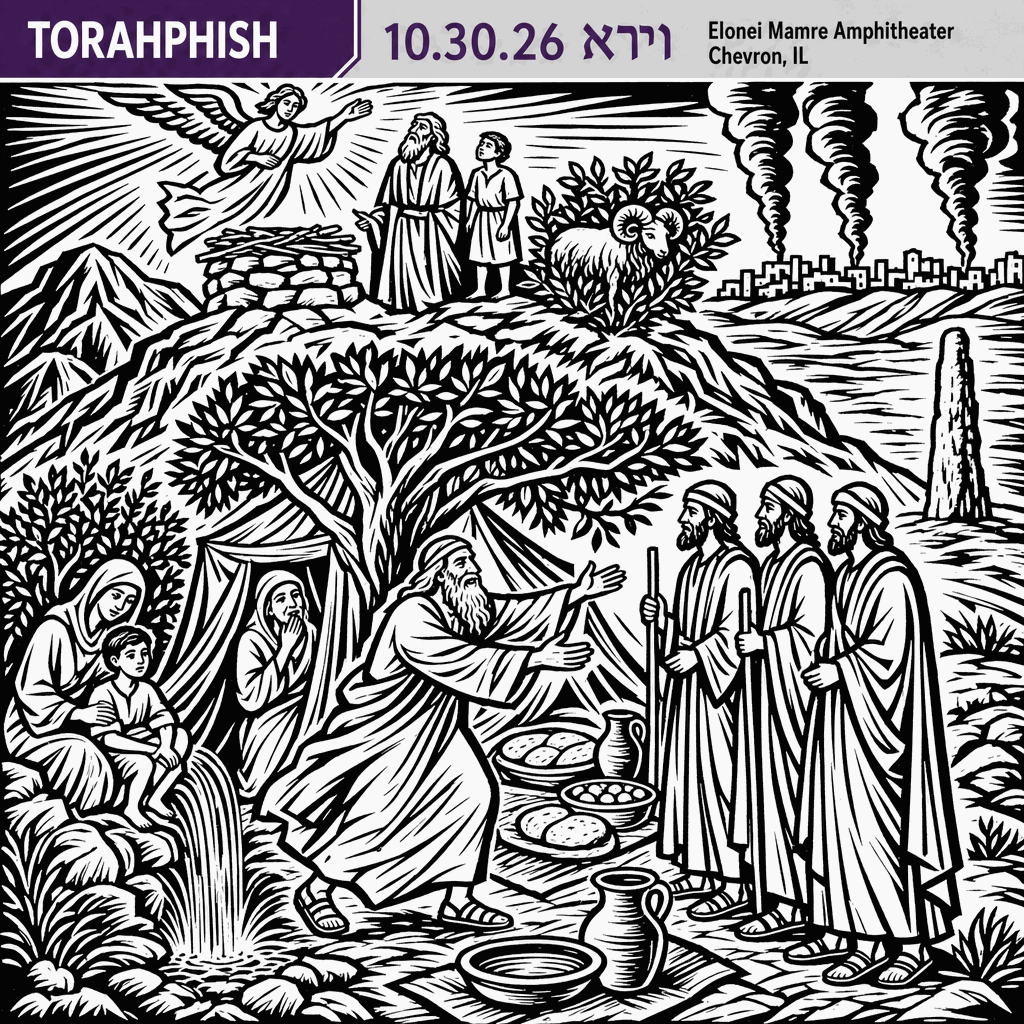
A stranger at the tent says that by this time next year, Sarah will be holding a son.
Sarah is ninety. Behind the flap, she laughs to herself, and gives her reason right there: "וַֽאדֹנִ֖י זָקֵֽן" - "and my husband is old."
Facts are facts.
🎶 'Facts don't do what I want them to'
Hashem turns to Avraham: why did Sarah laugh? "הֲיִפָּלֵ֥א מֵה' דָּבָ֑ר" - "is anything too wondrous for Hashem?"
Onkelos translates that first word as "היתכסא" - "is anything HIDDEN from Hashem?" Hold on to that word, hidden. We're going to need it.
And then comes one of the strangest lines in the whole Chumash:
"vatechachesh Sarah leimor lo tzachakti ki yarei'ah" - "וַתְּכַחֵ֨שׁ שָׂרָ֧ה ׀ לֵאמֹ֛ר לֹ֥א צָחַ֖קְתִּי כִּ֣י ׀ יָרֵ֑אָה" - "Sarah denied it, saying: I did not laugh... because she was afraid."
And Hashem answers: "לֹ֖א כִּ֥י צָחָֽקְתְּ" - "No... you DID laugh."
Sarah Imeinu... telling Hashem she didn't laugh???
🎶 'Confuse you say, this isn't me'
Unless there was more going on in that laugh than she knew.
🎶 'And the conversations I forget you'll tell me about tomorrow'
The Mei HaShiloach, the holy Izhbitzer, Rabbi Mordechai Yosef Leiner, says something deep is hiding in this verse, and to get there he starts with a Gemara we all learned in school:
"hakol bidei shamayim chutz miyirat shamayim" - "הַכֹּל בִּידֵי שָׁמַיִם חוּץ מִיִּרְאַת שָׁמַיִם" - "everything is in Heaven's hands, except the fear of Heaven."
Your health, your parnassah, the family you were born into... Everything is predetermined by Hashem! The Gemara in Niddah says that before a child is even born, the angel in charge asks: Will this child be strong or weak? Wise or foolish? Rich or poor?
But there's one question the angel never asks: righteous or wicked?
Whether you fear Hashem... that one's on YOU.
True, says the Izhbitzer, as far as a human mind can see. But then the holy Mei HaShiloach takes us on a wild ride, deeper and deeper into this concept: "בֶּאֱמֶת הַכֹּל בִּידֵי שָׁמַיִם וְאַף יִרְאַת שָׁמַיִם" - "in truth, everything is in Heaven's hands... EVEN the fear of Heaven."
So why does it feel like it's up to us? Because, he says, "וְרַק בָּעוֹלָם הַזֶּה הִסְתִּיר הַשֵּׁם יִתְבָּרַךְ דַּרְכּוֹ" - "only in this world did Hashem hide His way."
Let's slow down on those words, because everything hangs on them.
"His way" is how Hashem actually runs the world. Everything comes from Him, all the way down to the fear of Heaven stirring in your own heart. That's His way.
"Hid" means He covered His hand. He's doing all of it, and He set things up so we can't see Him doing it. Picture a father running behind his kid's first two-wheeler, one hand on the back of the seat. The kid is sure he's riding by himself. And the hand is there the whole time.
That's why our decisions, our actions, our circumstances can feel like our own. In this world, that feeling is the hiding.
One of our Avot, our holy father Yitzchak, came to see right through this hiding. The Izhbitzer says Yitzchak's whole midda was exactly this:
EVEN YIRAT SHAMAYIM SITS IN HASHEM'S HANDS. (even years later, Yaakov swears by Pachad Yitzchak, the fear of his father Yitzchak... פלא גדול!)
There was just one problem. "אַךְ הָעוֹלָם לֹא הָיָה רָאוּי לְיִקְרַת כָּזֶה" - "but the world was not worthy of something that precious."
How precious? On that same page of Gemara we started with, Rabbi Chanina teaches in the name of Rabbi Shimon bar Yochai that Hashem has nothing in His treasury except a treasure of yirat shamayim. Out of everything in creation, that's the one thing He keeps in His own treasure house.
So Yitzchak's truth couldn't arrive out in the open. It had to come into the world hidden... even from his own mother.
And that brings us back to the tent, where Sarah is standing there, all things hidden and revealed to her at the same time...
When Sarah says "my husband is old," it sounds like she's saying that not everything is in Heaven's hands. Ninety and ninety-nine? Nature gets the last word.
And here the Izhbitzer says something amazing: "לְכָךְ הוּצְרְכָה שָׂרָה לֵאמוֹר" - "that is why Sarah needed to say it."
Needed to? Sarah Imeinu needed to say something that sounds like doubt?
Yes. Because without that hiding, says the Izhbitzer, Yitzchak could not have been born into this world.
Why not? Think about who Yitzchak is. He's the message itself: even our fear of Heaven comes from Hashem. His whole life is meant to show it.
Now imagine Sarah had heard the news and said, "Of course! I believe it completely." Then the baby comes. What would everyone say? Look what her emunah earned her. Her fear of Heaven made this happen.
That's the exact opposite of what Yitzchak came to teach.
So Hashem let her laugh. He let her say "my husband is old," so that when the baby came, nobody could say Sarah's faith produced Yitzchak. He came from Hashem, start to finish.
And remember, this world is the place where Hashem hides His way. A truth that bright could only come in through a hidden door, and Sarah's laugh was that door.
And Sarah had no idea. The Ramban says she didn't even know her guests were angels. As far as she could tell, a passing traveler had made a kind wish. She thought about her own body, she thought about her husband, and she laughed inside herself. So when she was confronted, she was afraid, and she said "I did not laugh."
🎶 'You laugh and laughing, fall apart'
The hiding was hidden even from our holy mother Sarah.
Now remember Onkelos: is anything hidden from Hashem? The hiding only runs one way. Sarah couldn't see the whole picture, and Hashem saw all of it.
That's Yitzchak's lesson playing out before he's even born. The thought that felt most like Sarah's own was part of Hashem's plan the whole time.
So Hashem answers her midda k'neged midda, measure for measure. She spoke as if nature runs the show, and He showed her, with a baby in her arms, that everything is in His hand, even the fear of Heaven.
"וְזֹאת הוּא הוֹלָדַת יִצְחָק" - "and THIS is the birth of Yitzchak."
And if the good inside us comes from Hashem, what about the bad? The Izhbitzer takes one more step, and he warns us before we follow: even the sins of Israel are within Hashem's hashgacha, because through all of it His great Name grows and is made holy. "וְהָבֵן כִּי עָמוֹק עָמוֹק הוּא" - "understand this, for it is deep, deep."
Sins are still sins, and teshuvah is still teshuvah. But even when we fall, we never fall outside Hashem's hashgacha.
And Sarah gets the last word on laughing: "צְחֹ֕ק עָ֥שָׂה לִ֖י אֱלֹקִ֑ים" - "G-d has MADE laughter for me."
A baby boy, born...
🎶 'amidst the peals of laughter'
...and his name is Yitzchak: "he will laugh."
Even the laugh was His.
My bracha for all of us this Shabbos: to own every choice with our whole heart, and to know underneath it that even our fear of Heaven rests in Hashem's hand... and may He take every laugh we've hidden, even from ourselves, and turn it into a Yitzchak.
Good Shabbos, phriends.
- Crosseyed and Painless▶ listen1999-12-31 · Big Cypress Seminole Indian Reservation, Big Cypress, FL
- Mexican Cousin▶ listen2018-10-21 · Hampton Coliseum, Hampton, VA
- Sparkle▶ listen1996-12-31 · FleetCenter, Boston, MA
- Amidst the Peals of Laughter▶ listen2013-10-31 · Boardwalk Hall, Atlantic City, NJ
Mei HaShiloach / Onkelos / Ramban / Berakhot 33b / Niddah 16b